

Cortisol and Weight Gain: The Stress-Fat Connection Explained
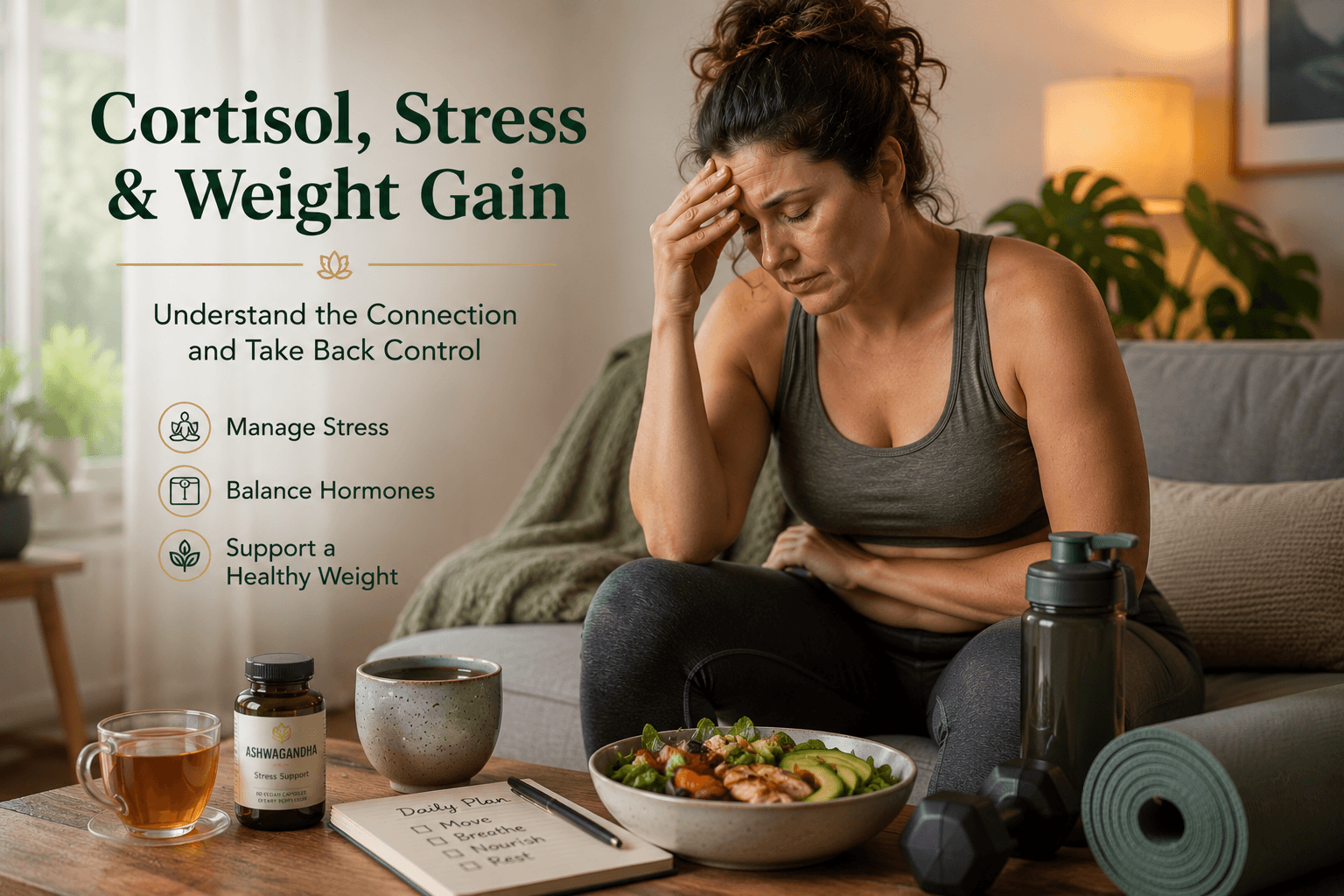
Cortisol and Weight Gain: The Stress-Fat Connection
You exercise. You eat well. You sleep reasonably. And yet the scale won't move — or worse, it creeps up.
If this sounds familiar, cortisol may be the missing piece.
What Cortisol Actually Does
Cortisol is your primary stress hormone, released by the adrenal glands in response to perceived threats. In the short term, it's genuinely useful: it mobilizes energy, sharpens focus, and prepares you for action.
The problem is chronic stress. Modern life keeps many people in a state of low-grade cortisol elevation for months or years — and the body was not designed for that.
How Elevated Cortisol Causes Fat Gain
1. It Drives Visceral Fat Storage
Cortisol specifically promotes fat storage around the abdomen and organs (visceral fat) — the most metabolically dangerous type. This is why chronic stress is so strongly associated with central obesity even in lean individuals.
2. It Breaks Down Muscle
Cortisol is catabolic — it breaks down muscle tissue for glucose. Less muscle means a lower resting metabolic rate, which makes fat loss harder over time.
3. It Disrupts Hunger Hormones
Elevated cortisol:
- Raises ghrelin (hunger hormone) — you feel hungrier
- Blunts leptin sensitivity (fullness hormone) — you don't feel satisfied
- Specifically increases cravings for high-fat, high-sugar foods
This is not a willpower problem. It's biochemistry.
4. It Wrecks Sleep Quality
Cortisol and melatonin operate on opposite schedules. When cortisol is chronically elevated, melatonin production is suppressed — leading to poor sleep. Poor sleep then raises cortisol further. A brutal cycle.
Signs Your Cortisol May Be Elevated
- Weight gain concentrated around the midsection
- Feeling "wired but tired" — exhausted but unable to relax
- Waking between 2–4 AM
- Sugar and salt cravings in the afternoon or evening
- Slow recovery from workouts
- Frequent illness
What Actually Lowers Cortisol
Ashwagandha (KSM-66)
The most well-studied adaptogen for cortisol reduction. A 2012 double-blind RCT found that 300 mg KSM-66 twice daily reduced serum cortisol by 27.9% over 60 days, with significant improvements in stress, anxiety, and body weight.
Phosphatidylserine
A phospholipid that blunts the cortisol response to exercise and mental stress. 400–800 mg/day has been shown to reduce cortisol in clinical studies.
Rhodiola Rosea
An adaptogen that reduces stress-induced fatigue and mental exhaustion. Works synergistically with ashwagandha.
Sleep
Nothing lowers cortisol more reliably than consistent, high-quality sleep. Prioritize it above all else.
Zone 2 Cardio
Moderate-intensity aerobic exercise (conversational pace, 30–45 min) actually lowers cortisol. High-intensity training done too frequently can raise it.
The CuraVita Approach
Our Calm+ formula combines 600 mg KSM-66 ashwagandha with phosphatidylserine and rhodiola to address cortisol from multiple angles. Combined with sleep support and stress management, it's the most evidence-backed stack we offer for the stress-weight cycle.
Get your free wellness guide
Be among the first to receive science-backed wellness research, delivered weekly.
No spam, ever. Unsubscribe anytime. We never share your email.