Gut Microbiome 101: What It Is and Why It Matters for Everything
Gut Microbiome 101
Your gut is home to approximately 38 trillion microorganisms — bacteria, fungi, viruses, and archaea — collectively known as the gut microbiome. This community weighs about 2 kilograms and contains more genes than the entire human genome.
It's not just about digestion. Your microbiome influences your immune system, mental health, weight, hormones, and even your risk for chronic disease.
The Gut-Brain Axis
The vagus nerve runs directly from your brainstem to your gut. Gut bacteria produce over 90% of the body's serotonin — the neurotransmitter most associated with mood regulation.
This is why gut dysbiosis (microbial imbalance) is increasingly linked to:
- Depression and anxiety
- Brain fog and poor focus
- Chronic fatigue
The connection runs both ways: chronic stress also disrupts the microbiome.
What Disrupts Your Microbiome
- Antibiotics — wipe out good and bad bacteria indiscriminately
- Ultra-processed foods — low in fiber, high in emulsifiers that damage gut lining
- Chronic stress — elevates cortisol, which alters microbial composition
- Poor sleep — disrupts circadian rhythms that gut bacteria follow
- Alcohol — reduces diversity and promotes inflammatory strains
Signs of Gut Dysbiosis
- Bloating after meals, especially with carbohydrates
- Irregular digestion (alternating constipation and loose stool)
- Food sensitivities that developed in adulthood
- Skin issues like eczema or acne
- Persistent low energy despite adequate sleep
How to Improve Your Microbiome
1. Eat More Fiber — But Diversify It
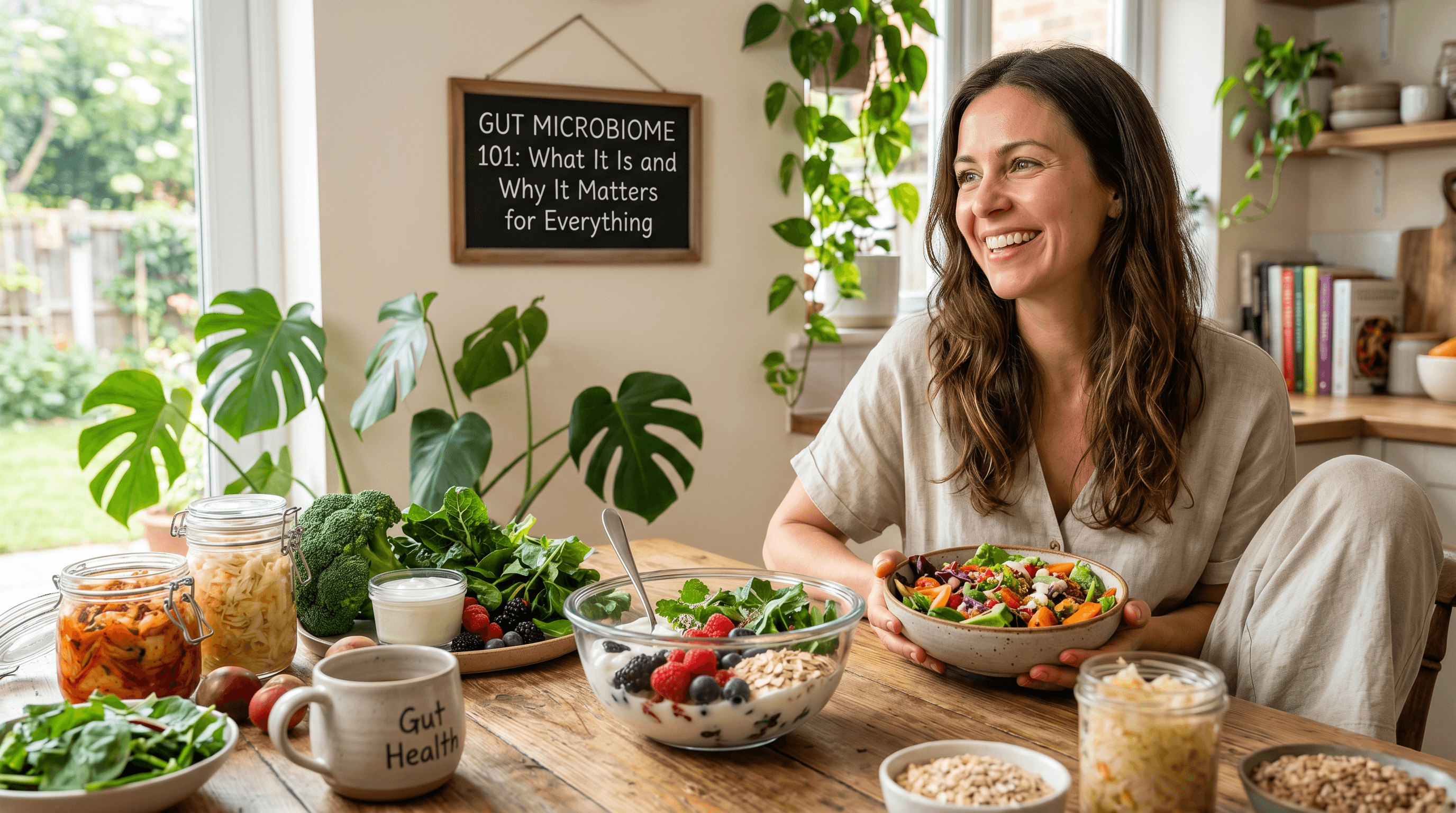
Different bacterial strains feed on different fibers. Aim for 30 different plant foods per week. This doesn't mean 30 different vegetables — herbs, spices, nuts, and seeds count.
2. Add Fermented Foods
Yogurt, kefir, kimchi, sauerkraut, and kombucha contain live cultures that can colonize the gut. A 2021 Stanford study found fermented foods increased microbiome diversity more than a high-fiber diet alone.
3. Choose the Right Probiotic
Not all probiotics are equal. Look for:
- Lactobacillus acidophilus — supports intestinal barrier
- Bifidobacterium longum — reduces IBS symptoms and cortisol
- Lactobacillus rhamnosus GG — most studied strain overall
CFU count matters less than strain quality. Our Gut+ formula contains 50 billion CFU across 12 clinically studied strains.
4. Don't Forget Prebiotics
Prebiotics are fibers that feed your existing beneficial bacteria. Key sources:
- Partially hydrolyzed guar gum (PHGG) — gentlest option, great for IBS
- Acacia fiber — well tolerated, feeds Bifidobacterium
- Green banana (resistant starch) — feeds butyrate-producing bacteria
5. Manage Stress
Cortisol directly reduces Lactobacillus populations. Even brief daily meditation (10 minutes) has been shown to meaningfully improve gut microbiome diversity over 8 weeks.
The Bottom Line
Your microbiome is not static — it responds to your lifestyle within days. Small consistent changes compound into meaningful shifts in diversity and function.
Focus on fiber variety, fermented foods, and stress management before reaching for supplements. When you do supplement, choose evidence-backed strains at therapeutic doses.
Get your free wellness guide
Be among the first to receive science-backed wellness research, delivered weekly.
No spam, ever. Unsubscribe anytime. We never share your email.