

Preventive Care Made Simpler: How Telehealth Supports Modern Wellness
Preventive Care Made Simpler: How Telehealth Supports Modern Wellness
Preventive care is one of the most practical ways to protect long-term health. CDC describes preventive care as including regular medical and dental checkups, screening tests, vaccines, and counseling or education that helps people make informed health decisions.
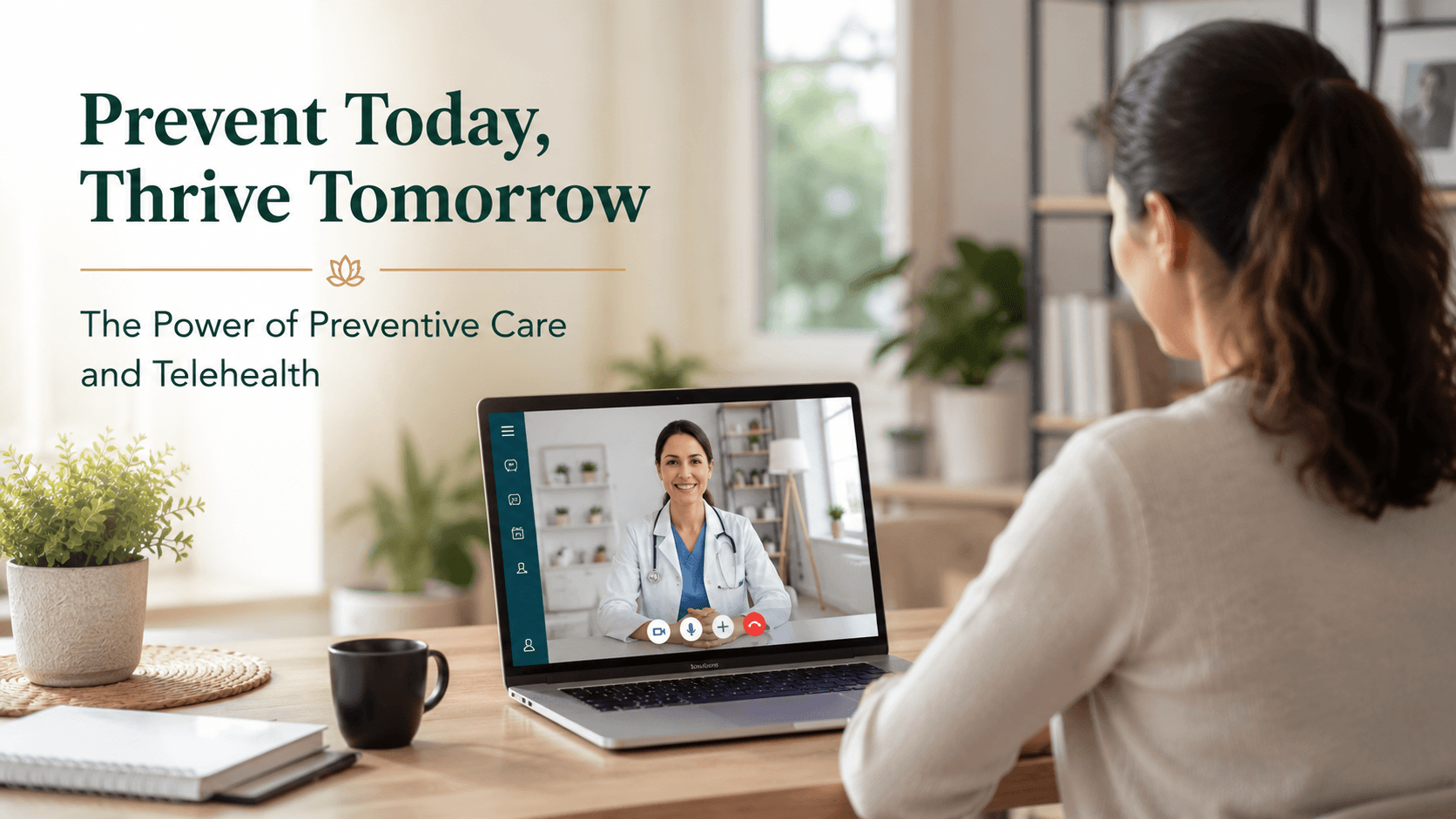
The challenge is not that preventive care is unimportant. It is that many people delay it. Busy schedules, travel time, childcare, work obligations, and fragmented healthcare systems can all get in the way. That is where telehealth can help. HHS notes that telehealth allows people to connect with healthcare providers from home and can improve convenience, timely access, and care coordination.
What counts as preventive care?
Preventive care can include:
- routine checkups
- evidence-based screening tests
- vaccines
- counseling related to health risks
- discussions about lifestyle, stress, sleep, and chronic disease prevention
CDC and USPSTF both frame preventive care around early detection and evidence-based services that can improve health outcomes.
Why telehealth matters for prevention
Telehealth is not only for urgent issues. HHS guidance explains that telehealth can help people access care more conveniently, receive timely support, and reduce barriers like travel and time off work. That matters for preventive care because convenience often determines whether care happens at all.
Telehealth can be especially useful for:
- follow-up conversations after lab work
- medication check-ins
- nutrition and lifestyle counseling
- behavioral health support
- care planning and triage
- chronic condition management
HHS best-practice guidance also notes that telehealth can support nutrition care and chronic disease prevention efforts.
Prevention is still needed even when you feel fine
A major benefit of preventive care is that it is often designed for people without obvious symptoms. Screening is about finding issues early, when treatment or intervention may be more effective. CDC notes this clearly in its preventive care and cancer screening resources.
That is why a wellness strategy should not rely only on how you feel today. Feeling okay is not always the same as being up to date on the screenings, counseling, or check-ins that support long-term health.
Telehealth and modern care planning
A telehealth-first workflow can help people stay organized with preventive care by making it easier to:
- ask questions sooner
- review risk factors
- get referrals
- discuss screening timelines
- follow up without another long commute
This is a reasonable inference from HHS telehealth guidance emphasizing accessibility, convenience, and timely care.
A wellness checklist to discuss with your provider
A useful preventive care conversation can include:
- whether you are due for any screenings
- whether your vaccines are current
- whether your sleep, stress, activity, and nutrition habits need support
- whether you need follow-up for blood pressure, blood sugar, or weight-related concerns
- whether telehealth is appropriate for future follow-up visits
The exact preventive services depend on age, sex, health history, and risk profile, so published site copy should avoid one-size-fits-all screening advice and instead encourage individualized medical guidance. That caution is consistent with CDC and USPSTF’s evidence-based approach.
CuraVita takeaway
Preventive care works best when it is easy to access and easy to repeat. Telehealth can remove friction from that process by making it easier to connect, follow up, and stay engaged in your health before problems become bigger.
FAQ
What is preventive care?
Preventive care includes services like checkups, screenings, vaccines, and counseling intended to protect health and catch issues early.
Can telehealth be used for preventive care?
Yes. Telehealth can support preventive conversations, follow-up visits, counseling, chronic condition management, and other non-emergency care needs.
Is telehealth just for urgent care?
No. HHS describes telehealth as useful across a range of care needs, including ongoing and preventive care.
References
- Centers for Disease Control and Prevention (CDC). Preventive Care and Screenings.
- U.S. Department of Health & Human Services (HHS). What Is Telehealth?
- U.S. Preventive Services Task Force (USPSTF). Preventive Services Guidelines.
- World Health Organization (WHO). Telemedicine: Opportunities and Developments.
Related Articles


Get your free wellness guide
Be among the first to receive science-backed wellness research, delivered weekly.
No spam, ever. Unsubscribe anytime. We never share your email.