

How Much Protein Do You Actually Need? A Science-Based Guide
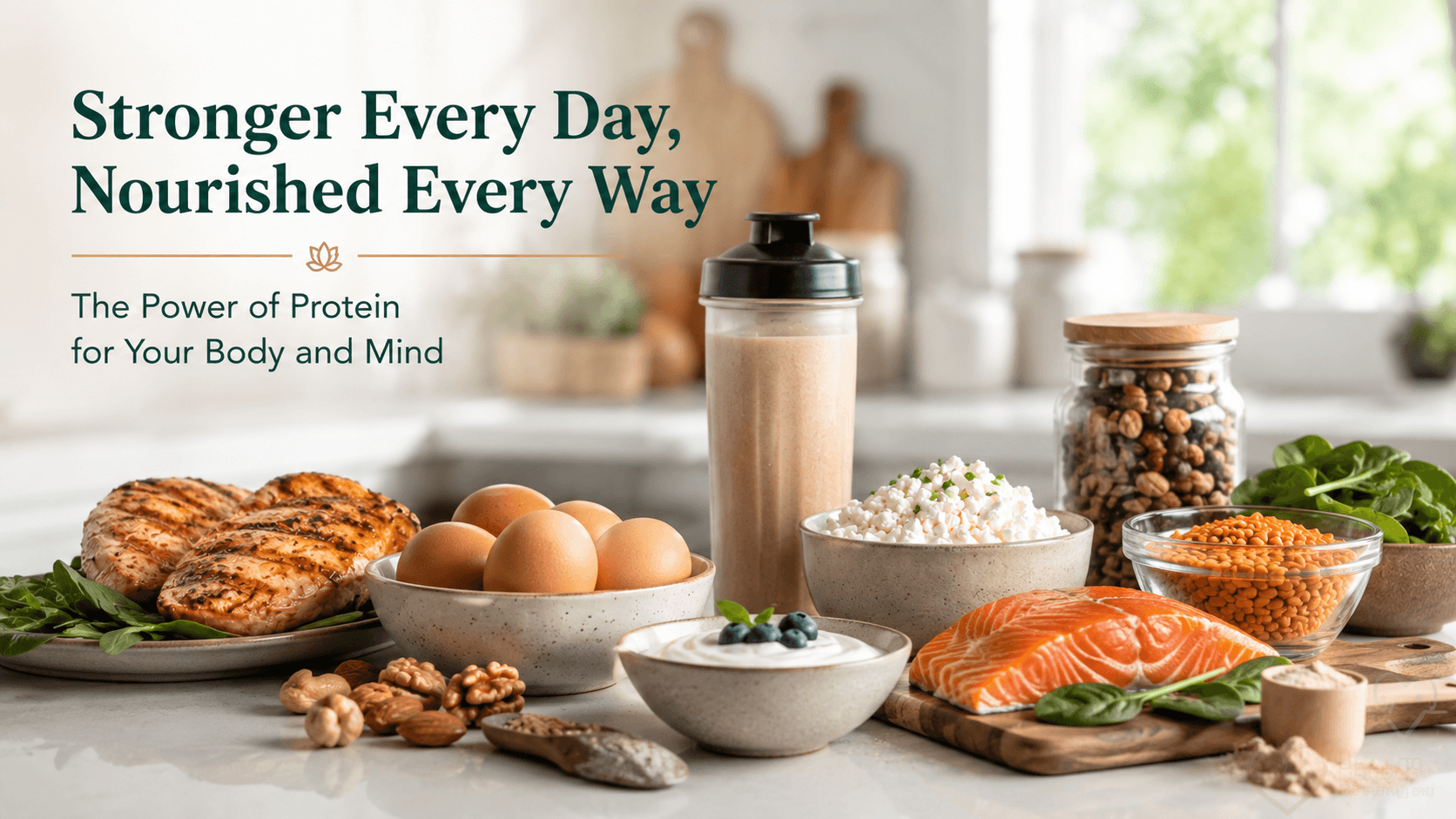
How Much Protein Do You Actually Need?
The RDA for protein is 0.8 grams per kilogram of body weight. This number is frequently cited — and frequently misunderstood. It represents the minimum intake to prevent deficiency in sedentary adults, not the optimal amount for health, body composition, or longevity.
The research suggests most people — especially those over 40 or pursuing body composition goals — need significantly more.
Why Protein Matters Beyond Muscle
Protein is not just for gym-goers. Every cell in your body requires amino acids for:
- Enzyme production — virtually every metabolic reaction
- Immune function — antibodies are proteins
- Hormone synthesis — insulin, glucagon, thyroid hormone
- Neurotransmitter precursors — serotonin from tryptophan, dopamine from tyrosine
- Tissue repair — skin, hair, gut lining
What the Research Actually Supports
For General Health
Most researchers now suggest 1.2–1.6 g/kg as the optimal range for healthy adults — roughly double the RDA.
For Muscle Building or Retention
The evidence converges around 1.6–2.2 g/kg for individuals engaged in resistance training. Beyond 2.2 g/kg, additional benefits are marginal.
For Fat Loss
Higher protein intakes during a calorie deficit help preserve lean mass. Studies show 2.0–2.4 g/kg during active fat loss phases reduces muscle catabolism.
For Adults Over 40
Muscle protein synthesis becomes less efficient with age (anabolic resistance). Older adults benefit from higher protein per meal — at least 40 g per sitting to maximally stimulate muscle protein synthesis, versus ~20–25 g in younger adults.
Protein Quality Matters
Not all protein is equal. What matters is the amino acid profile — specifically leucine, which triggers muscle protein synthesis.
| Source | Leucine per 30g protein | Complete? | |---|---|---| | Whey isolate | ~3g | Yes | | Eggs | ~2.5g | Yes | | Chicken breast | ~2.3g | Yes | | Lentils | ~1.3g | No | | Pea protein | ~1.8g | Near-complete |
Practical Targets (Examples)
| Weight | Moderate activity (1.4 g/kg) | Active/training (2.0 g/kg) | |---|---|---| | 60 kg (132 lbs) | 84g | 120g | | 80 kg (176 lbs) | 112g | 160g | | 100 kg (220 lbs) | 140g | 200g |
How to Hit Your Target
- Anchor each meal with protein — aim for 30–40g per meal
- Prioritize whole food sources — chicken, fish, eggs, Greek yogurt, cottage cheese
- Use protein powder strategically — not as a replacement for whole foods, but to close gaps
The Bottom Line
Most people eating a typical Western diet are under-consuming protein relative to what research supports for optimal body composition and health. Doubling your protein intake — while keeping calories appropriate — is one of the highest-leverage nutrition changes you can make.
Related Articles



Get your free wellness guide
Be among the first to receive science-backed wellness research, delivered weekly.
No spam, ever. Unsubscribe anytime. We never share your email.